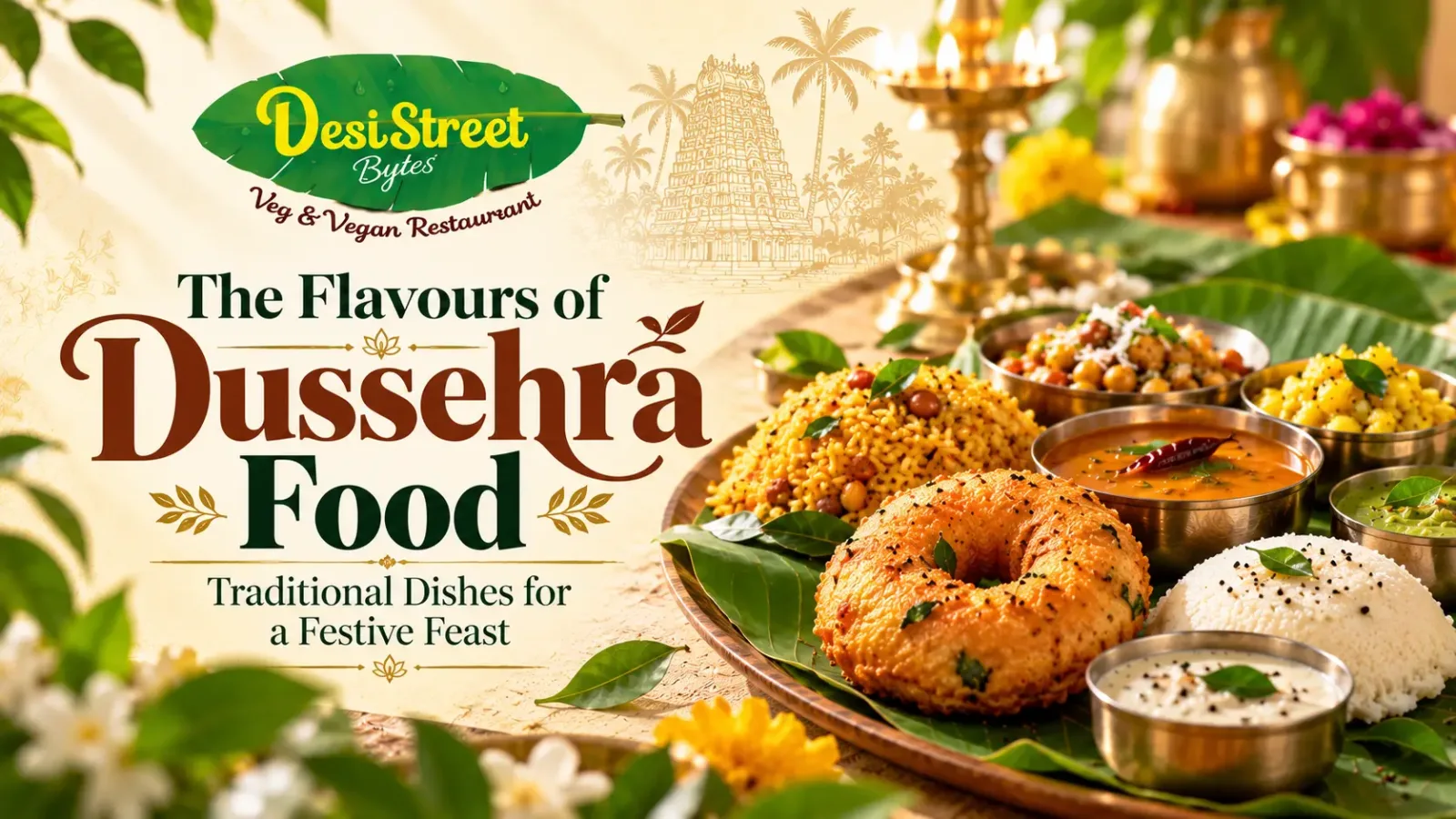
The Flavours of Dussehra Food: Traditional Dishes for a Festive Feast
QUICK ANSWER |
Dussehra (also called Vijayadashami or Dasara) falls on Tuesday, October 20, 2026, the tenth day after nine nights of Navratri. Customs vary by region and family, but South Indian Dussehra food often includes sundal, pulihora, payasam, vada and bobbatlu, and many households offer the food to the deity first. Desi Street Bytes is 100% vegetarian. Both locations list vada, sambar vada, mirchi bajji, Mysore bonda and the Andhra Thali, and you can ask about catering or Banthi Bhojanam for a larger gathering across the Phoenix Valley. |
By the time Dussehra comes around, somebody in the house has been cooking for a week. The pooja room smells like camphor. Your aunt has already called twice about the sweets.
Dussehra food doesn't come as one dish, and nobody agrees on the exact lineup. Every family, region and community does it a little differently. A handful of dishes keep showing up on South Indian tables for Vijayadashami, though, and this post goes through them: what each one is, how it changes from state to state, and which ones you can actually order from us. If you're hunting for South Indian food in Phoenix or Chandler and can't spare a day at the stove, that last part matters.
What Dussehra is, and why the food matters
Dussehra, also called Vijayadashami or Dasara depending on where you are, is the tenth day after nine nights of Navratri. It celebrates the win of good over evil, told in different ways: Rama's victory over Ravana in many places, Durga's victory over the buffalo demon Mahishasura in others.
Customs differ a lot across South India, so treat this as a sampler, not a rulebook. In Tamil Nadu, Karnataka (where the dolls are called Gombe in Kannada) and many Telugu homes, families set up Golu, or Bommala Koluvu, and neighbors visit through the evenings of Navratri. Ayudha Puja, when tools, books and vehicles are blessed, is most associated with Karnataka, Tamil Nadu and Kerala, and it usually falls on Maha Navami, the day before Vijayadashami. Telugu families often worship the jammi tree on Vijayadashami, and many families in Kerala start a child's first lessons that day.
Food runs through all of it. Many families offer a dish to the deity first and then eat it as prasadam, though how and what they offer depends on the household. Plenty keep festival meals vegetarian, and some fast on certain Navratri days, so the dishes below lean simple, vegetarian and made in big batches.
Sundal, the Navratri visiting snack
Sundal is boiled legumes tossed with mustard seeds, curry leaves, green chili and fresh coconut. In Tamil homes it's the classic Navratri snack, handed out in small bowls to guests who come to see the Golu, and Telugu families make a similar dish called guggillu. Chickpeas are the usual choice, but black-eyed peas, green gram and peanuts all get used.
The tempering does the work. Mustard seeds pop in hot oil, curry leaves spit, and the whole kitchen smells like the festival has started. It's light, filling and easy to eat on your feet, and if you're hosting, it's the easiest vegetarian appetizer on the list.
Pulihora (puliyogare), the tamarind rice
Tamarind rice goes by pulihora in Andhra and Telangana, puliyogare in Karnataka and puliyodarai in Tamil Nadu, and the recipes differ. Andhra pulihora is usually cooked with tamarind pulp, turmeric and chilies, with a tempering of peanuts and dal. Puliyogare and puliyodarai more often start from a spice paste or roasted powder with red chilies, sesame and dals, and some cooks add a little jaggery.
It's tangy with a nutty crunch from the peanuts, and it gets better after an hour of sitting. That's why it travels well to a temple, a potluck or a friend's pooja. It's a common temple prasadam across the South, and plenty of people pair it with curd rice to cool the tang.
Payasam and sweet pongal
Payasam (payasa in Kannada) is milk simmered with rice, vermicelli, dal or other ingredients, sweetened with sugar or jaggery and finished with cardamom and ghee-fried cashews and raisins. Some versions use coconut milk. Sweet pongal, called sakkarai pongal in Tamil and chakkara pongali in Telugu, is thicker, made with rice, moong dal and jaggery. It's best known at Pongal in January, but many homes make it as an offering at other festivals too.
Either one can open a Dussehra pooja meal. Both punish impatience. Hurry the milk and it tastes flat. The good ones get stirred until you run out of other things to do.
Vada and garelu, the fried offering
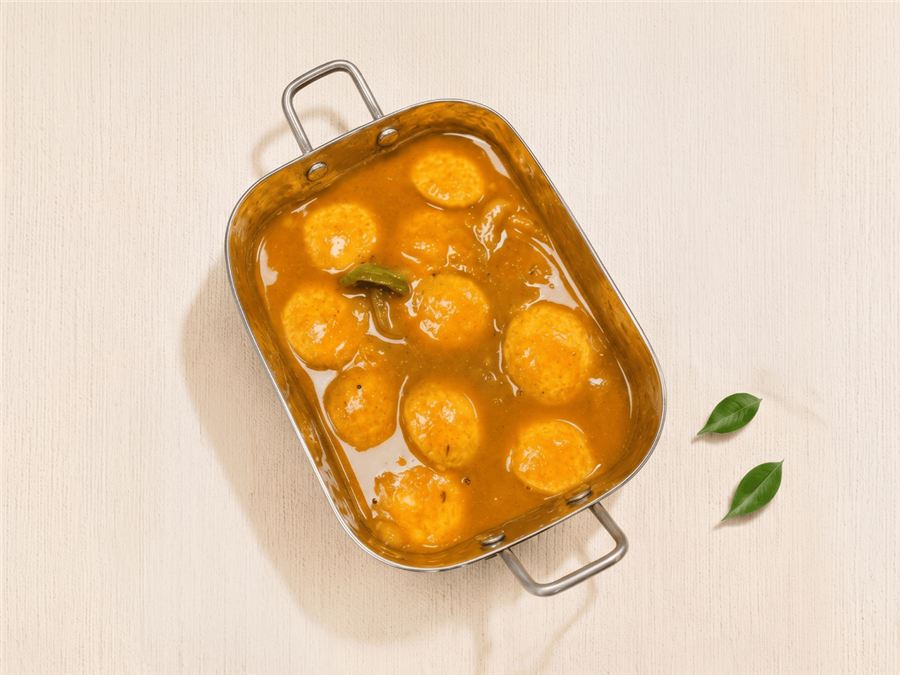
Not every vada is the same dish. Medu vada, the one most people picture, is made from soaked and ground urad dal, shaped into a ring and fried until crisp outside and fluffy inside. It's served with sambar and chutney, or as sambar vada with the vada sitting in sambar. Masala vada, also called paruppu vadai or dal vada, is made from coarsely ground chana dal with onion and spices, so it comes out crunchier and more rugged. In Telugu homes, garelu usually means the urad dal kind, and it turns up at many festival meals.
If you'd rather not stand over a fryer on a festival day, both our locations list vada, sambar vada, mirchi bajji, stuffed mirchi bajji, Mysore bonda, punugulu (an Andhra fried batter snack) and poori masala. If it matters which style of vada you're getting, ask the team at your location. Everything is prepared fresh daily.
Bobbatlu, the sweet that takes patience
Bobbatlu is the Telugu name. In Karnataka it's holige or obbattu, in Tamil Nadu it's often called poli or bobbattu, and the Maharashtrian cousin is puran poli. It's a thin, soft flatbread stuffed with a sweet filling, usually chana dal and jaggery scented with cardamom, though some versions use toor dal or coconut, and it's cooked on a griddle with ghee. You'll see it on many Telugu and Kannada festival tables, and Dussehra is one of the occasions.
Rolling the stuffed dough thin without tearing it takes practice, so the person in your family who makes great bobbatlu probably gets talked about. Most of this list carries over to Diwali a few weeks later, when Indian sweets and fried snacks take over the table.
Thali, banana leaf and Banthi Bhojanam
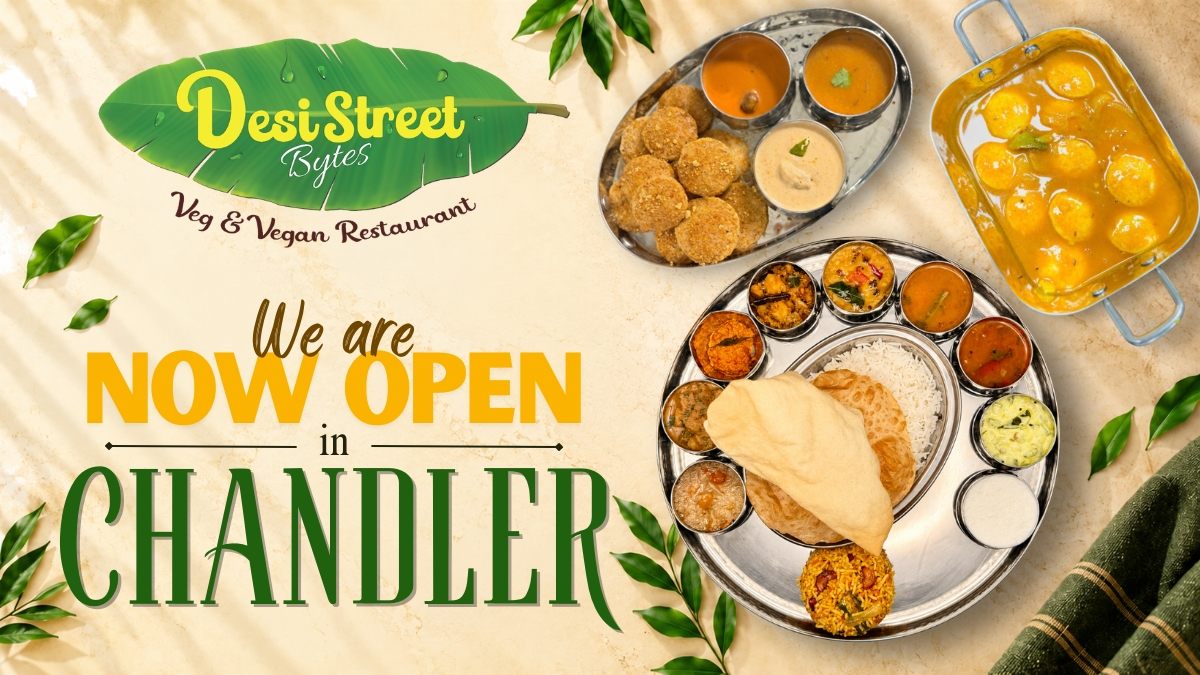
Once you've picked your dishes, the question is how to serve them. The traditional answer is a thali or, in many homes, a banana leaf. If you want a full plate rather than a few snacks, the Andhra Thali is where we'd point you, and both locations list a weekday and a weekend thali. Several Google reviews on our homepage mention the veg thali, calling it a feast, homestyle and the best one a guest had eaten in the USA.
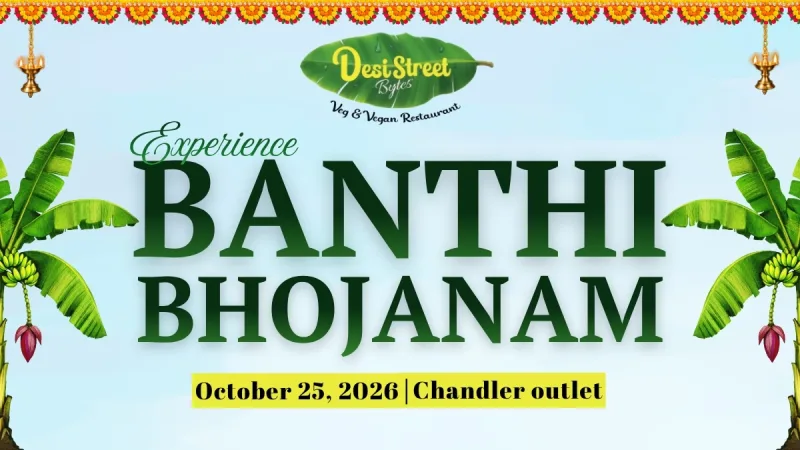
For a bigger group there's Banthi Bhojanam. It's a communal Andhra-style feast, traditionally served with guests seated in rows (pankthi style) and rooted in festive village gatherings and temple meals. Depending on the event, the food goes onto banana leaves or eco-friendly leaf plates called vistaraku. It's not limited to Dussehra: it suits family celebrations, poojas, cultural events, community get-togethers and corporate events, so a festive gathering around Dussehra is one fit among many. Kerala's Onam sadya is a similar banana-leaf tradition from a different part of the South. You request it through the form on that page: name, phone, email, event type, date, guest count and special requests.
Dussehra food at Desi Street Bytes: what's on the menu
Neither menu lists sundal, pulihora, payasam, sweet pongal or bobbatlu, so those are still home-kitchen jobs. What both menus do cover is the savory side: the fried snacks listed above, plus the Andhra Thali. Chandler's menu also lists gulab jamun and ras malai for dessert. They aren't traditional South Indian festival sweets, but they're there if you want something sweet. The Phoenix menu doesn't currently list a dessert section, so check with that location first. Menus change, so it's worth a call to your preferred location before you plan around a dish.
Hosting a pooja or a get-together? Our catering covers dosas, idlis, kothu parottas and paniyaram made fresh for groups, plus Banthi Bhojanam. We serve the Phoenix Valley, and home gatherings, office lunches and poojas are among the events we plan for. Tell us what you have in mind when you send the request and we'll tell you what's possible. We don't publish set prices, so ask for a quote, and have a date and a guest count ready.
Eating out instead? Our Phoenix location is fast casual and 100% vegetarian, so among vegetarian restaurants near Phoenix AZ it suits a quick lunch or a grab-and-go order. Our Chandler location is the fine dine side, built for a family to settle in and order for the table. With vegan options running through a fully vegetarian menu, it also saves the usual hunt through vegan restaurants near Chandler AZ when the table is mixed. Both locations prepare everything fresh daily, with no MSG and no artificial colors.
Your Dussehra plan
Tuesday, October 20 is close, so here's your homework: figure out the one dish your family would never forgive you for skipping. Tell us what it is on Instagram at @desistreetbytes. If the table needs something hot and fried, or a full Andhra Thali, both our locations have you covered. Order pickup through Toast, get it delivered by DoorDash or Uber Eats, or stop by Phoenix or Chandler. Shubh Vijayadashami.
Frequently asked questions
When is Dussehra in 2026?
Dussehra (Vijayadashami) falls on Tuesday, October 20, 2026. Sharad Navratri starts on October 11, and Dussehra closes out the festival.
What food is traditional for Dussehra in South India?
It varies by household, region and community. Common dishes include sundal (guggillu in Telugu homes), pulihora or puliyogare, payasam, sweet pongal, vada or garelu, and bobbatlu or holige. Many families offer food to the deity first and keep the meal vegetarian, but practices differ.
What is the difference between payasam and sweet pongal?
Payasam is a milky pudding made with rice, vermicelli or dal, sweetened with sugar or jaggery and finished with cardamom. Sweet pongal (sakkarai pongal) is thicker and made with rice, moong dal and jaggery. Both are made as offerings in many South Indian homes.
Can I order catering or Banthi Bhojanam for a Dussehra pooja?
Yes, you can request either through a form on our website, where you share your name, phone, email, event type, date, guest count and any special requests. We serve the Phoenix Valley. Festival sweets like payasam and bobbatlu aren't on our regular menu, so mention what you're hoping for and we'll tell you what's possible. Pricing isn't published, so the form is also how you get a quote.
Are Dussehra, Dasara and Vijayadashami the same festival?
They all point to the same tenth day after nine nights of Navratri. Dasara is the usual name in Karnataka and among many Telugu families, though in places like Mysore it can refer to the whole ten-day celebration. Dussehra is widely used across North India and by the diaspora, and Vijayadashami is the name tied to the day's rituals.